Toddler Tantrums: What Actually Works (By Age)
Why toddlers have tantrums, what to do in the moment at each age, how to prevent the next one, and when tantrums are a reason to talk to your pediatrician.

When to start potty training, signs your toddler is ready, child-led vs intensive methods, handling accidents and regression, and when to ask your pediatrician.
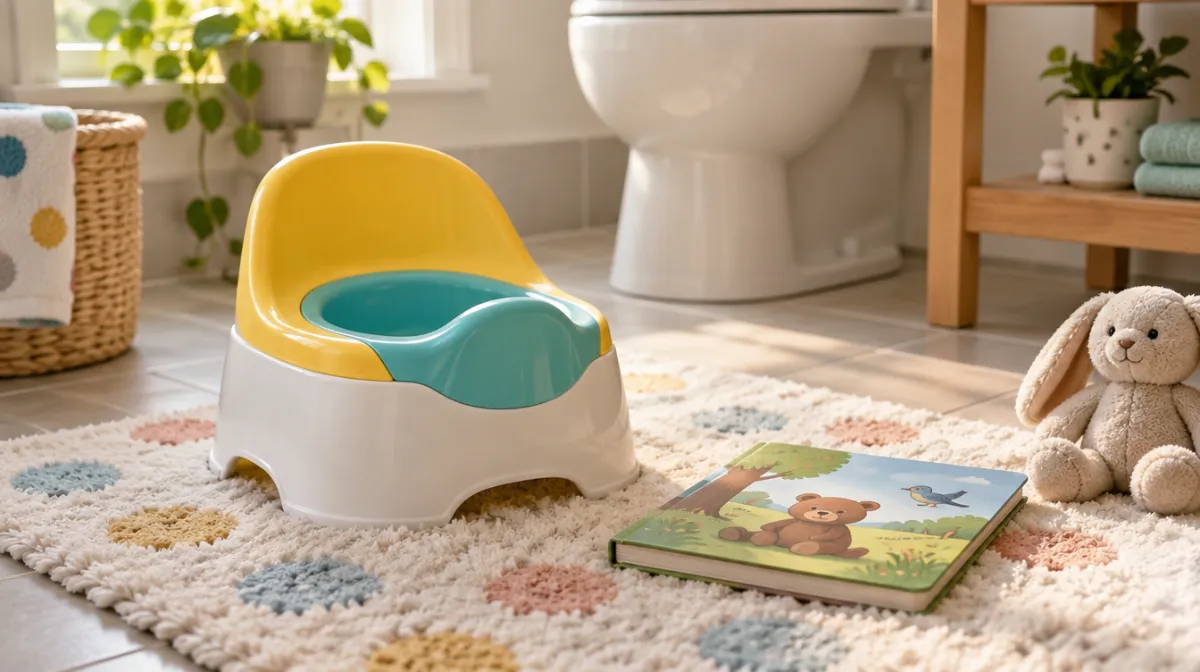
Potty training is a milestone many parents dread. It doesn’t need to be a battle. Waiting for readiness, keeping things positive and staying consistent do most of the work.
Many children show readiness between about 18 months and 3 years:
Both can work. Choose what fits your child and family, and avoid starting during big changes like a new sibling or house move.
Accidents are part of the process. Stay calm, clean up without fuss and remind them where wee and poo go. Regression often happens with stress, illness or change, so go back a step and keep things positive.
Staying dry at night depends on bladder maturity and often happens later; see our bedwetting guide for what helps. Use night nappies or pull-ups until mornings are consistently dry. A predictable bedtime routine with a last wee before bed helps too.
Toddler independence can also show up as tantrums; see toddler tantrums: what works.
Some children trained this way succeed quickly, especially if they’re ready. Others need longer, which is normal.
On average, boys may train a little later, but every child is different.
Small, immediate rewards like stickers can help some children. Keep them simple and phase them out.

Every article is edited by a human and checked against our editorial policy. Spotted a mistake? Tell us.
Why toddlers have tantrums, what to do in the moment at each age, how to prevent the next one, and when tantrums are a reason to talk to your pediatrician.
Why toddlers bite, from teething to frustration, what to say and do in the moment, how to prevent the next bite, handling biting at daycare and when to worry.
Why babies, toddlers and preschoolers cry when you leave, how long separation anxiety lasts, a goodbye routine that works, starting daycare and when to worry.