Potty Training: What the Evidence Says
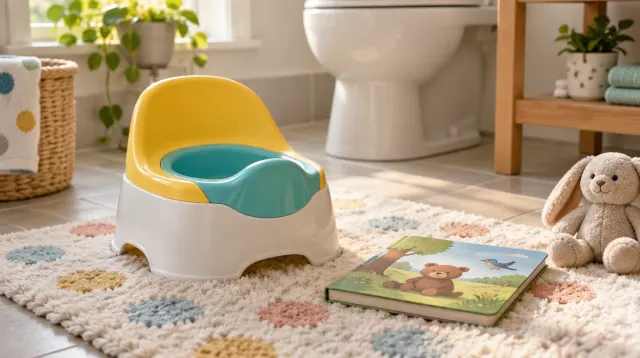
When to start potty training, signs your toddler is ready, child-led vs intensive methods, handling accidents and regression, and when to ask your pediatrician.

Why toddlers have tantrums, what to do in the moment at each age, how to prevent the next one, and when tantrums are a reason to talk to your pediatrician.

Your toddler is face-down on the supermarket floor, screaming because the banana broke. Everyone is looking. You are wondering what you did wrong.
Probably nothing. Tantrums are one of the most normal parts of early childhood. Knowing why they happen, and what helps at each age, makes them shorter, less frequent and a lot less stressful.
Toddlers have big feelings and very limited tools for managing them. The part of the brain that handles self-control and planning is still developing, while the desire for independence is growing fast. Add limited language and you get frustration that comes out as screaming, flailing and flopping.
Tantrums are most common from about 18 months to 3 years and usually become less frequent by age four, as language and self-control improve.
Common triggers:
Young toddlers can’t reason their way out of a meltdown. Keep them safe, stay close and use distraction: a new toy, a change of scene, pointing out a bird outside. Name the feeling simply: “You’re sad. The banana broke.”
This is peak tantrum territory. What helps:
Older preschoolers can start learning what to do with big feelings. Practise calm-down tools when they are calm, not during a meltdown: deep “balloon breaths”, squeezing a pillow, a cosy calm-down corner to cool off. Praise specific moments of self-control: “You were so frustrated, and you asked for help. That was great.”
Handling tantrums day after day is exhausting, and it’s easy to feel like you are failing. You’re not. If stress, low mood or anger are building up, support can help parents as much as children; Adult Counselling explains the difference between counselling and therapy if you’re considering talking to someone.
Tantrums are usually normal, but check in with your child’s doctor if:
Most tantrums last a few minutes, though some go on longer. If tantrums regularly last a very long time or feel extreme, mention it to your pediatrician.
For many toddlers, staying close until they calm down (a time-in) works better than a time-out. Short time-outs can help older preschoolers for behaviors like hitting.
Almost never. Tantrums happen to children with loving, capable parents. How you respond shapes how quickly they fade.

Every article is edited by a human and checked against our editorial policy. Spotted a mistake? Tell us.
When to start potty training, signs your toddler is ready, child-led vs intensive methods, handling accidents and regression, and when to ask your pediatrician.
Why toddlers bite, from teething to frustration, what to say and do in the moment, how to prevent the next bite, handling biting at daycare and when to worry.
Why babies, toddlers and preschoolers cry when you leave, how long separation anxiety lasts, a goodbye routine that works, starting daycare and when to worry.